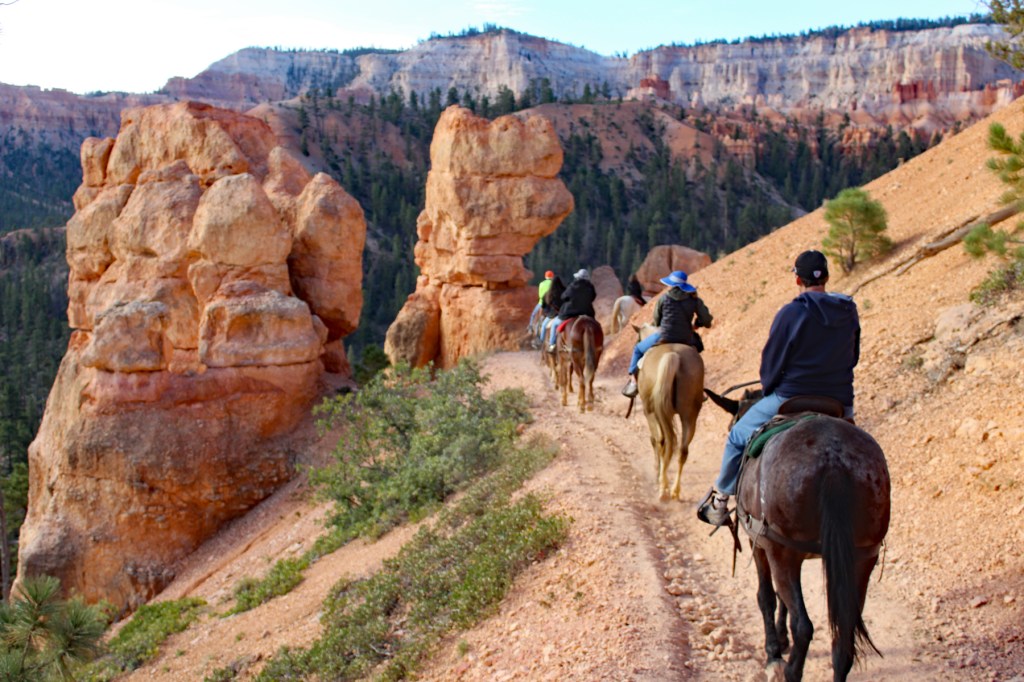
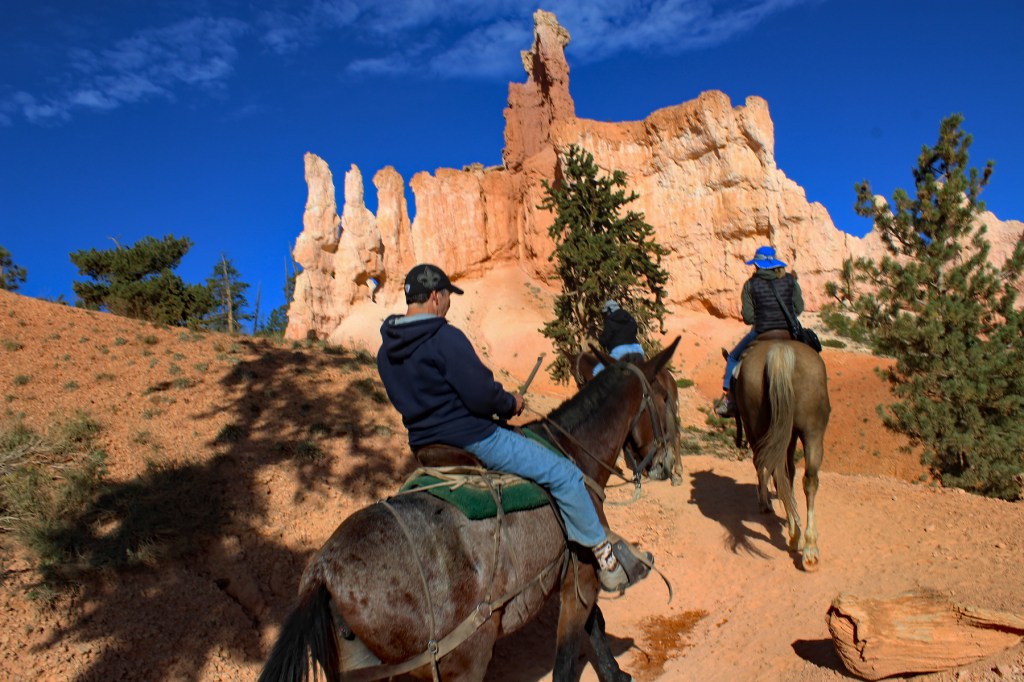
Another quick blog because of limited and slow wifi. We were out on the road to see the sunrise at Sunrise Point this morning and then took a 90-minute horseback ride (they actually were mules) into Bryce Canyon, dropping down 1,000 feet over two miles on a narrow, bumpy trail and then riding another two miles back up. That’s Carol directly in front of me.
After the ride, we both had trouble standing up.
We spent the rest of the day exploring other canyons and doing our best to avoid thunderstorms in the area.
Sunrise Point sunrise
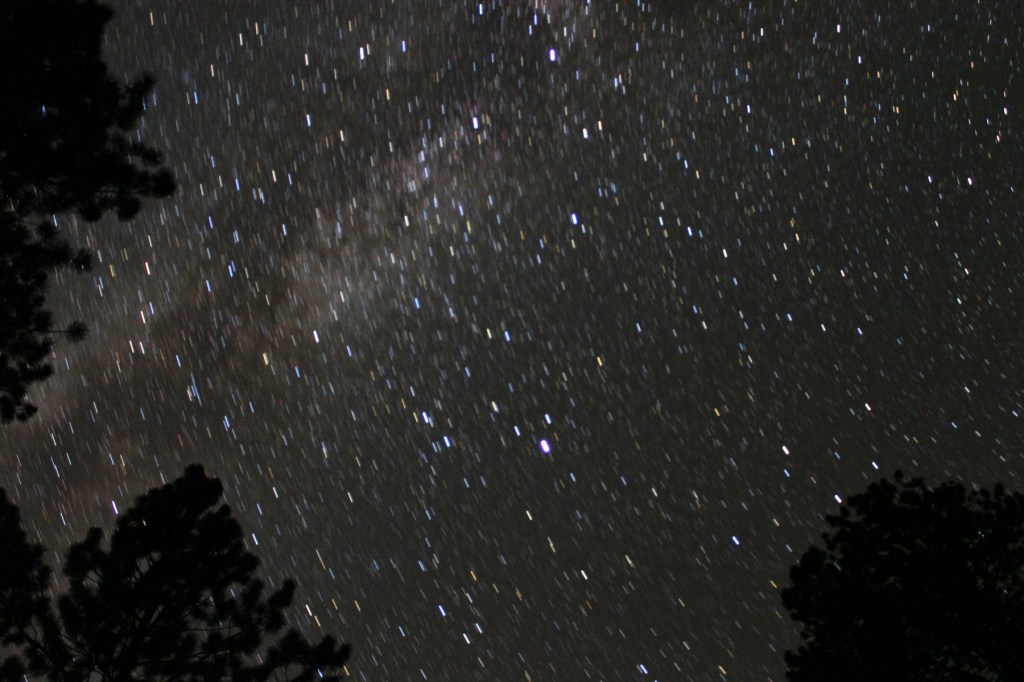
I spent some time last night looking up at the stars in our campground.
Tomorrow it’s on to Zion National Park and then Las Vegas the day after.
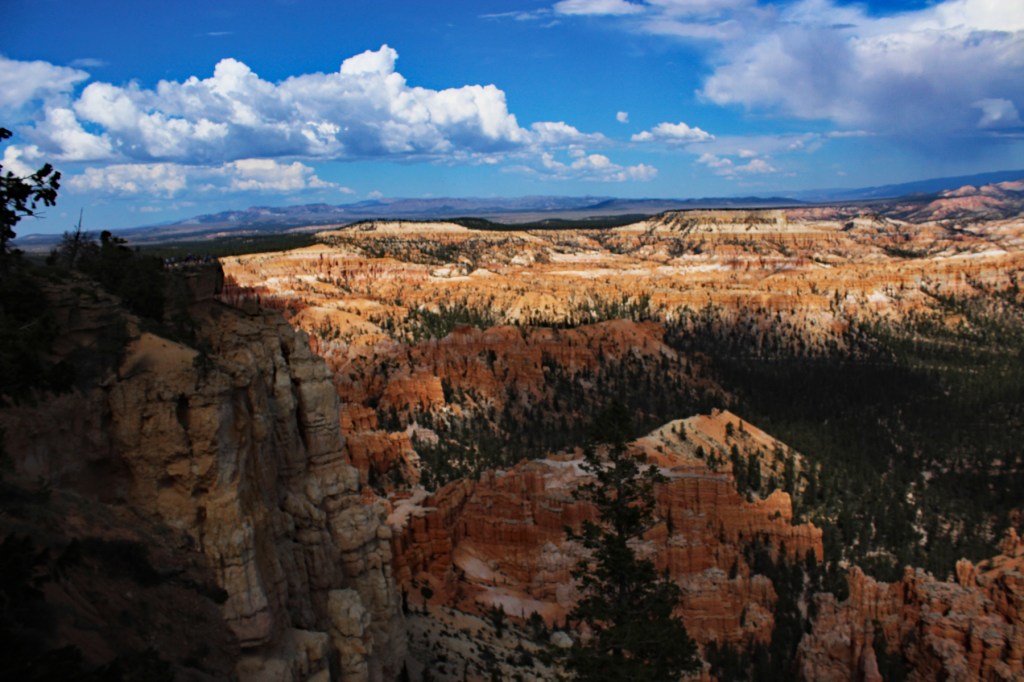
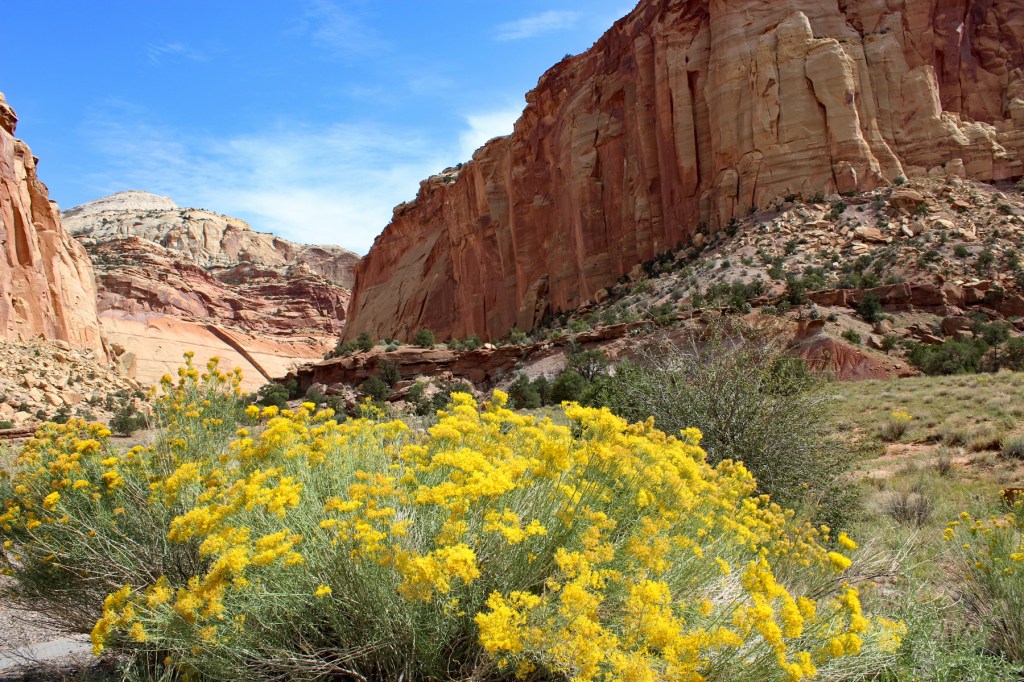
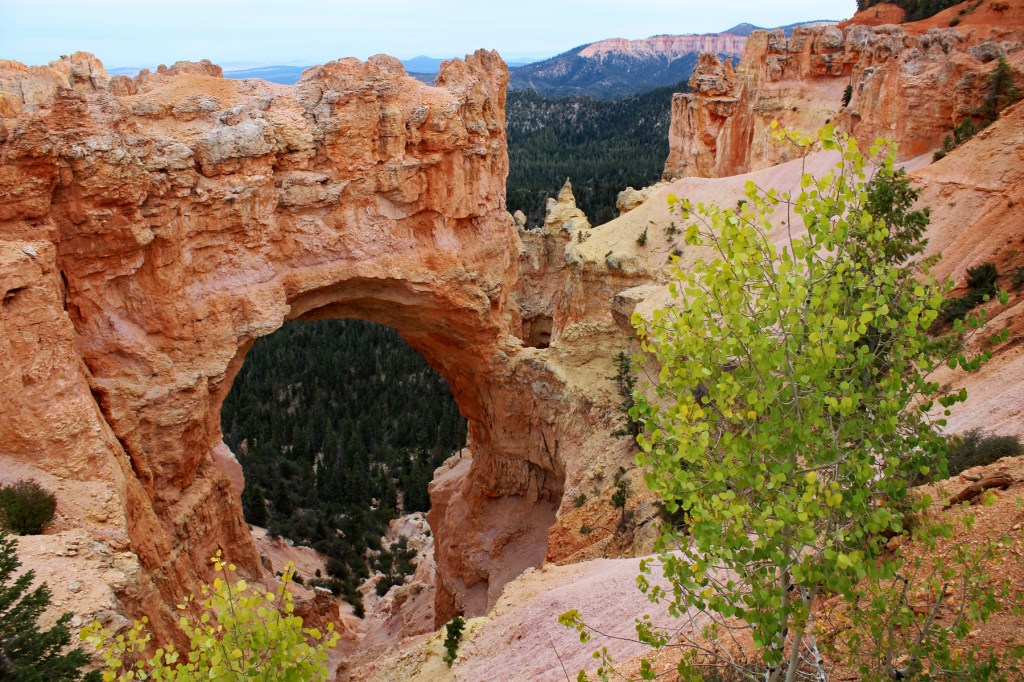
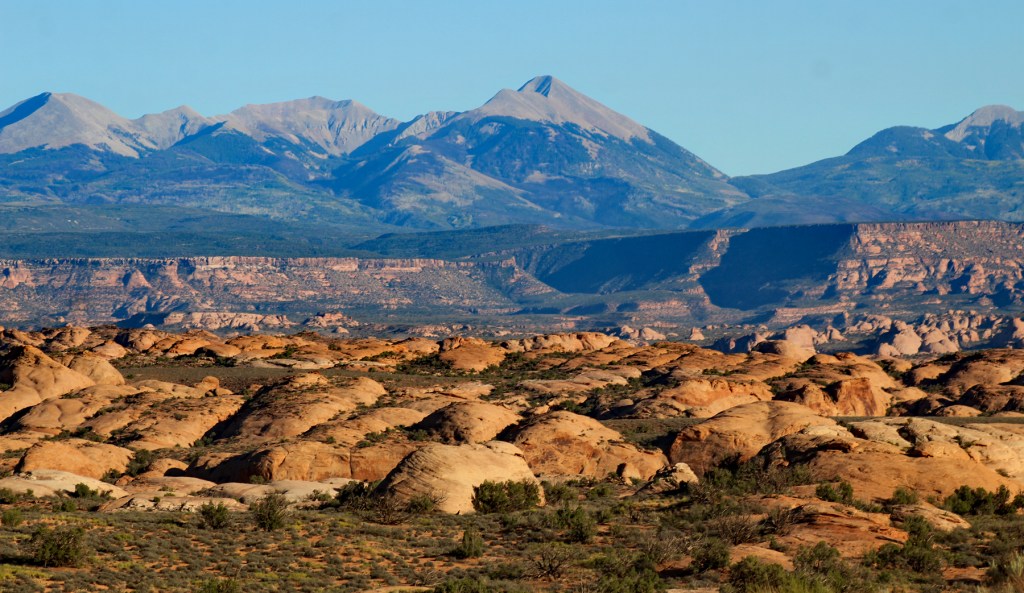
This will be a quick blog tonight. We are in Bryce National Park and the wifi is weak. The top photo is from Capitol Reef National Park, where we spent about two hours on the way to Bryce. The botton three photos are from Bryce. We are taking a horseback ride into the canyon tomorrow morning.
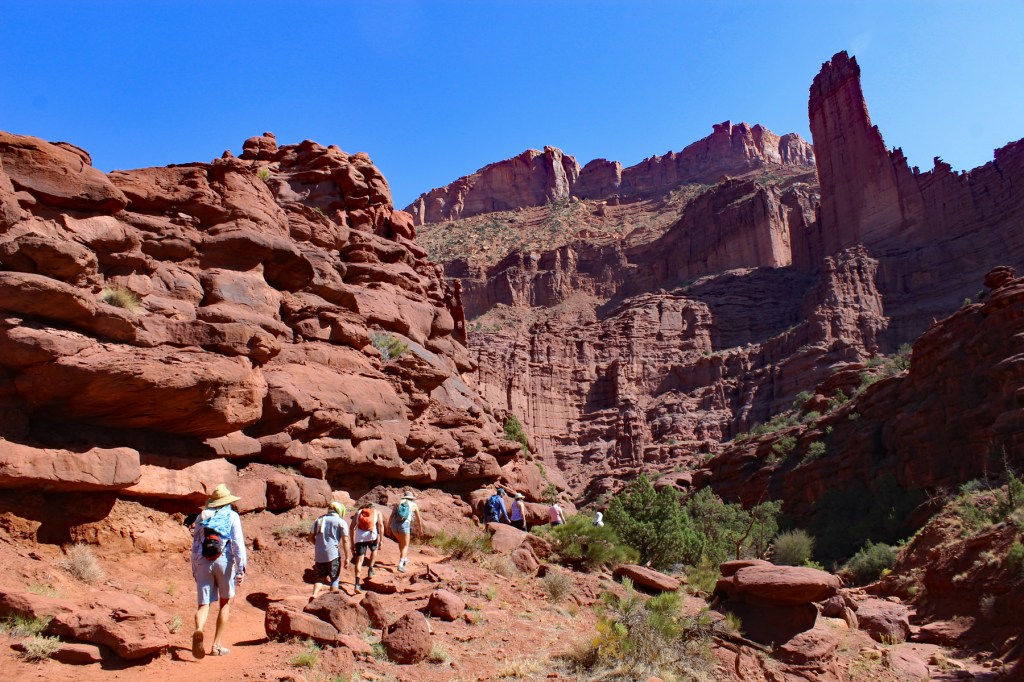
Reaching the end of our hike into a deadend canyon
After spending the previous two days in the Arches and Canyonlands national parks, with many hours of hiking and exploring, today we planned to relax a little before moving on tomorrow to the Capitol Reef and Bryce Canyon national parks, south and west of here.
It didn’t turn out that way.
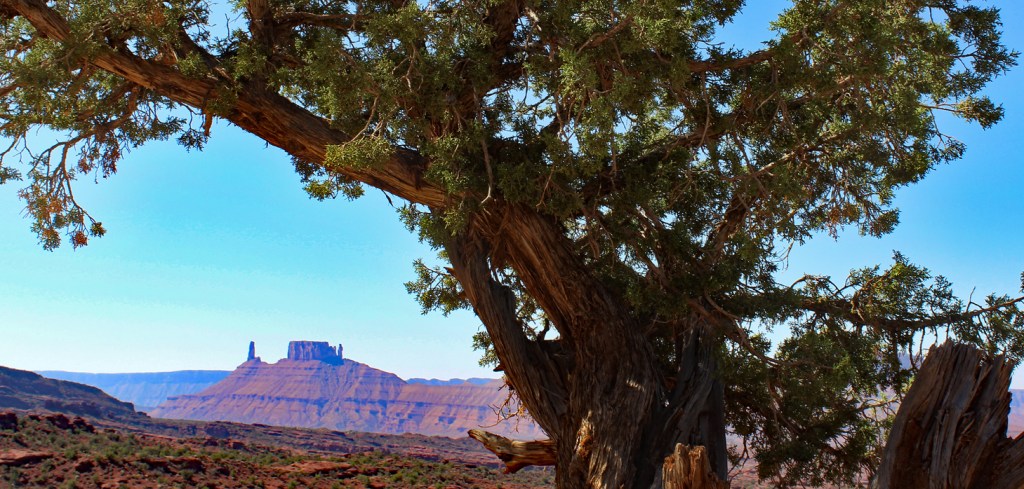
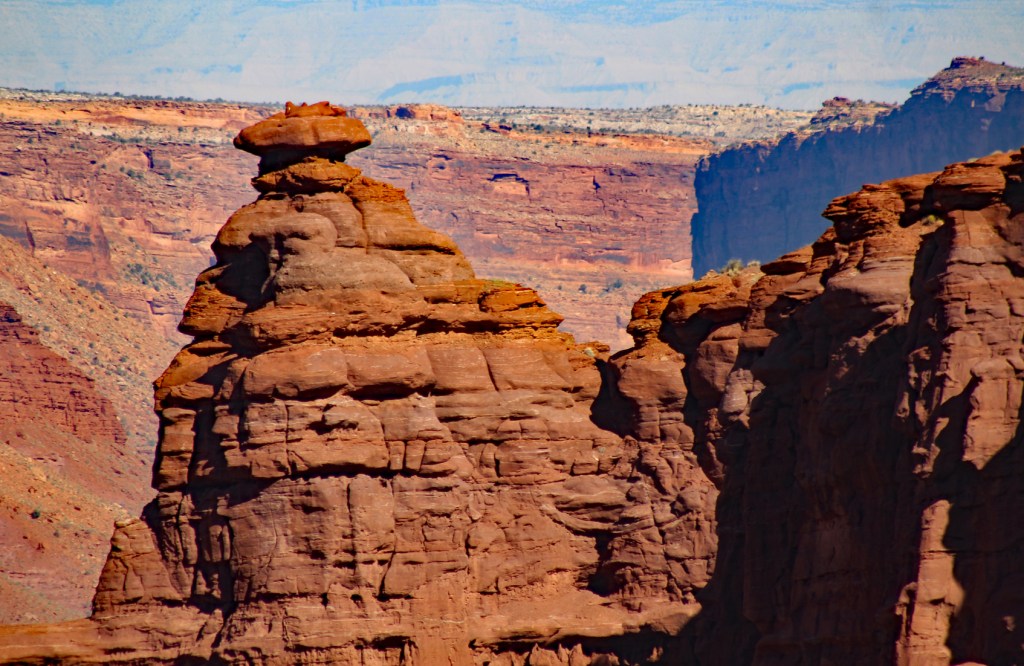
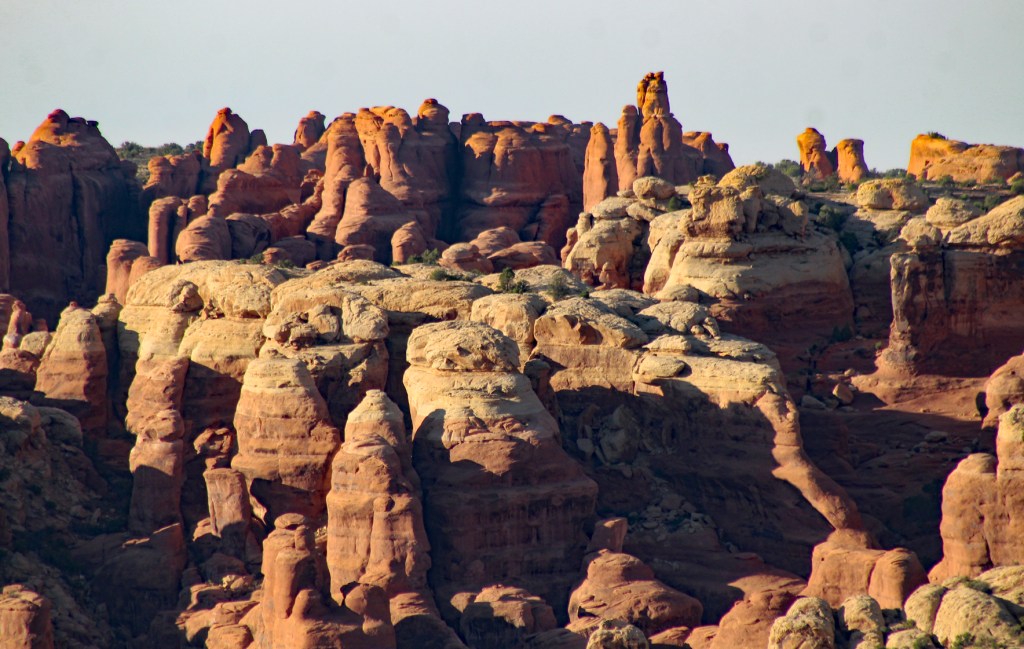
We drove 30 miles outside Moab to Fisher Towers, a remote area that isn’t a state or national park, but the landscape was just as amazing as anything we’ve seen the past two days. Tall, jagged rock formations, deep canyons, spires, pinnacles and a maze of trails that presented surprises on almost every turn.
The first trail took us deep into a canyon with a narrow path along ledges that eventually dropped down onto the canyon’s floor. At times we has to just lean back and be amazed by what we were seeing.
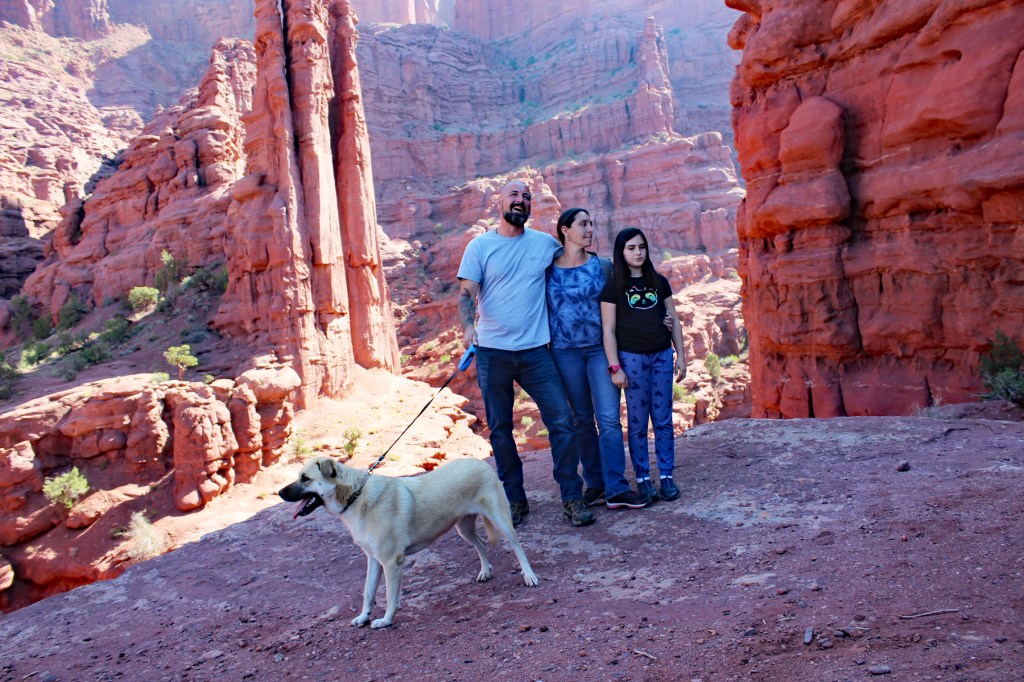
It was not one of the primary trails and we saw no one else until we were heading out. That was when we met James and Sadie, their two children and dog. Much to our surprise, James used to be a personnel chef to a family on Scarborough’s Prouts Neck. When the family moved to Colorado, they asked him to join them, so he and his family now live in Colorado, too. This was their first visit to Fisher Towers.
Jack, Sadie and daughter Cayenne with their dog. The son was off exploring.
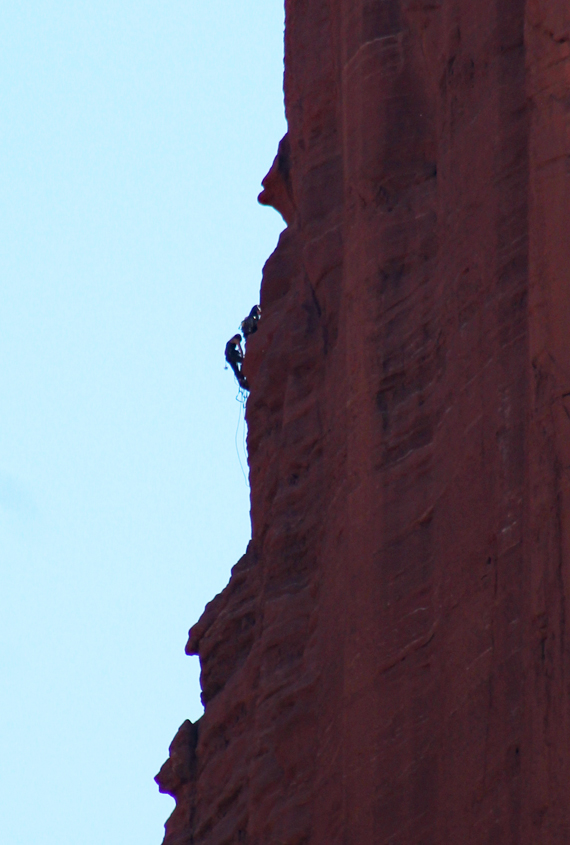
Also at the Towers we watched a crew filming individuals doing technical climbing up one of the tall spires. They were part of a recovery program from addiction and the filming was to record their journey through addiction recovery.
We later took a trail up through the tall rock formations toward Titan, the tallest of them all. But we didn’t quite make it. We had wonderful views of Titan, but it was in the low 90s, there was little protection from the sun, and we realized we weren’t carrying enough water. We were satisfied to turn around and head back.
Climbing up toward Titan
Hikers better prepared (and younger) than we were
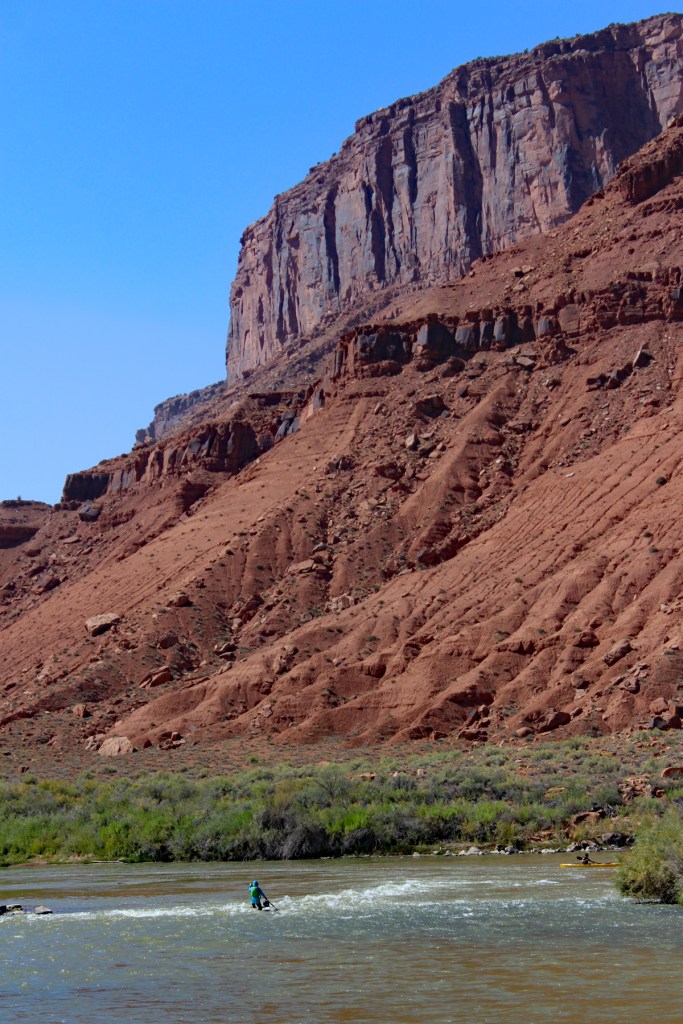
On the drive back to Moab, we followed canyon walls with the Colorado River cutting in between. With it being Saturday, there were many rafters, kayakers, and paddleboarders.
In the shade of one of the canyon walls, this is where we stopped for lunch — and a nap!
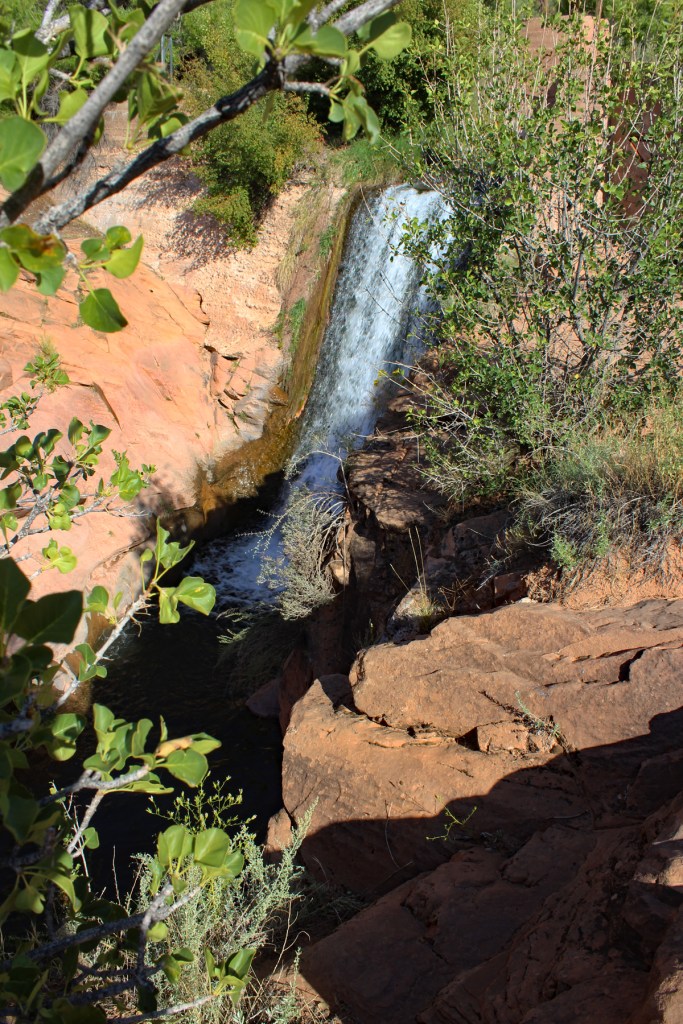
Our final stop of the day was at Mill Creek Falls, a rarity in this part of the state. This was something Steve Hill found on an internet search and we were curious to find it.
Some other images from today’s explorations:
A big beetle — not sure what it was
Look closely for this technical climber on one of the tallest spires
Tomorrow is a travel day with the final destination of Bryce Canyon National Park and Capitol Reef National Park in between.
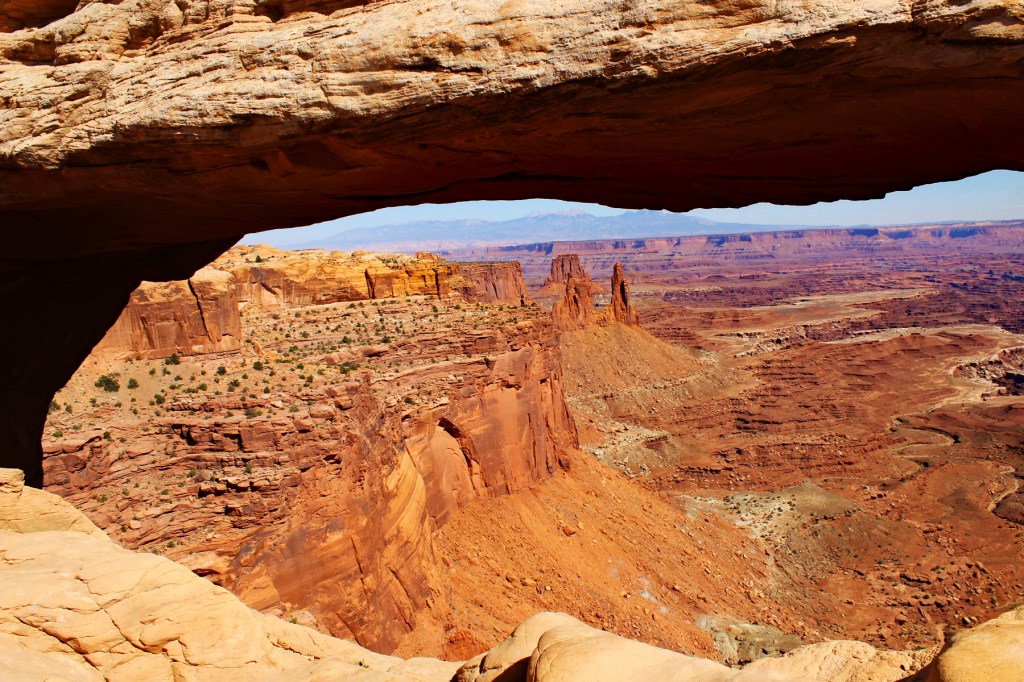
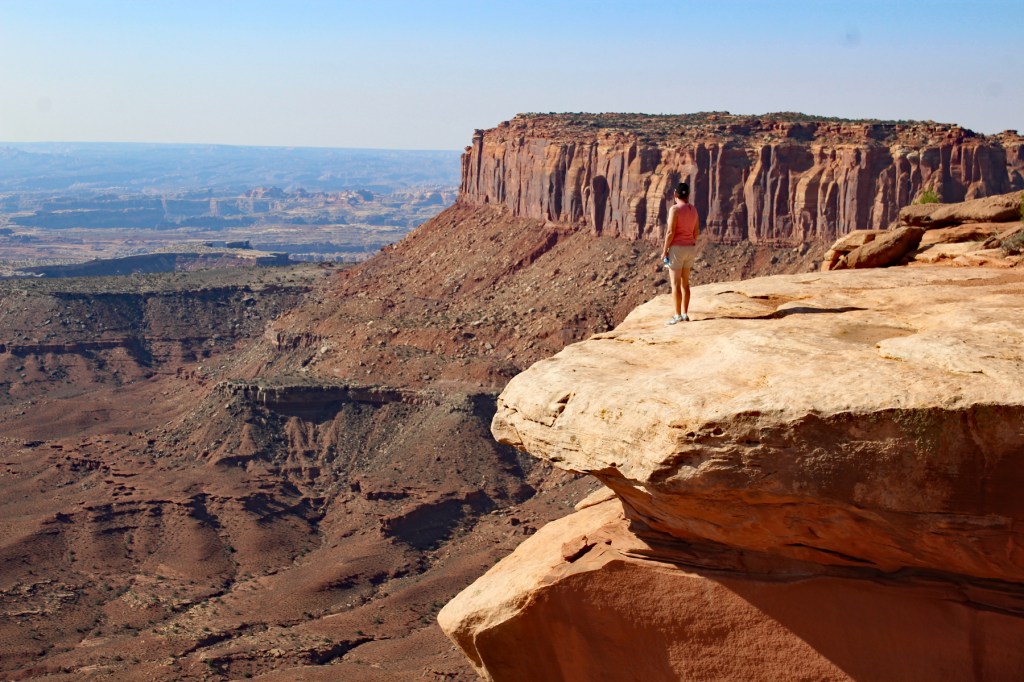
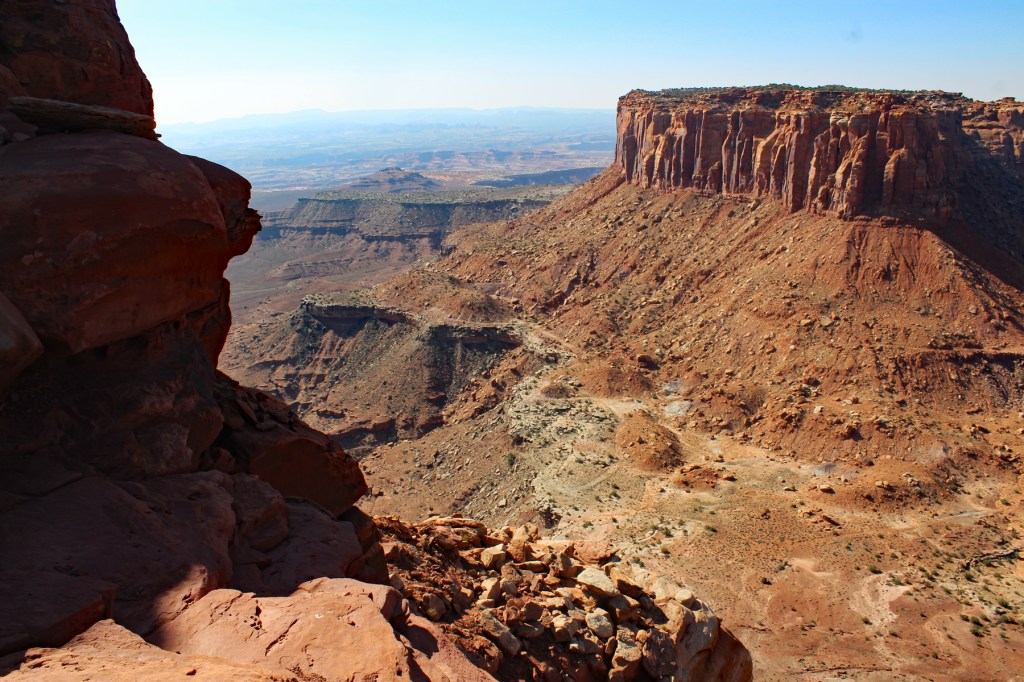
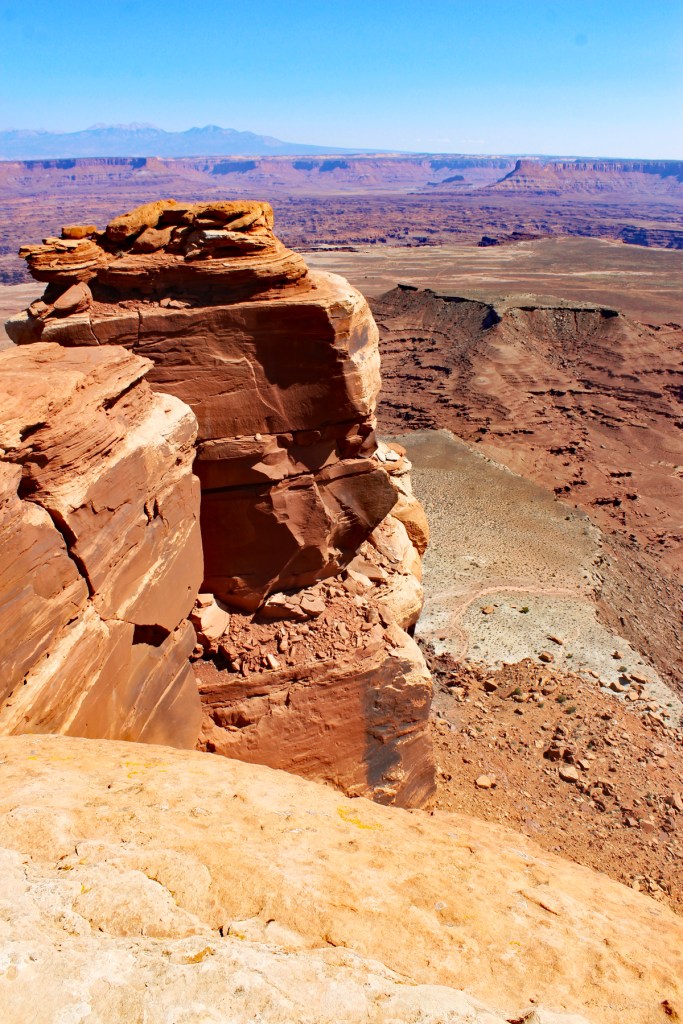
Today we explored a different side of Utah’s unending natural wonders, Canyonlands National Park and the Dead Horse Point State Park. Our time at the Arches National Park showcased the spendor of the red rock canyon walls, spires, and jagged ridges from ground level looking up. Today it largely was looking down into canyons of golden and sand-colored walls from high-up ridges on which we hiked five trails — four in Canyonlands and one in the Dead Horse State Park.
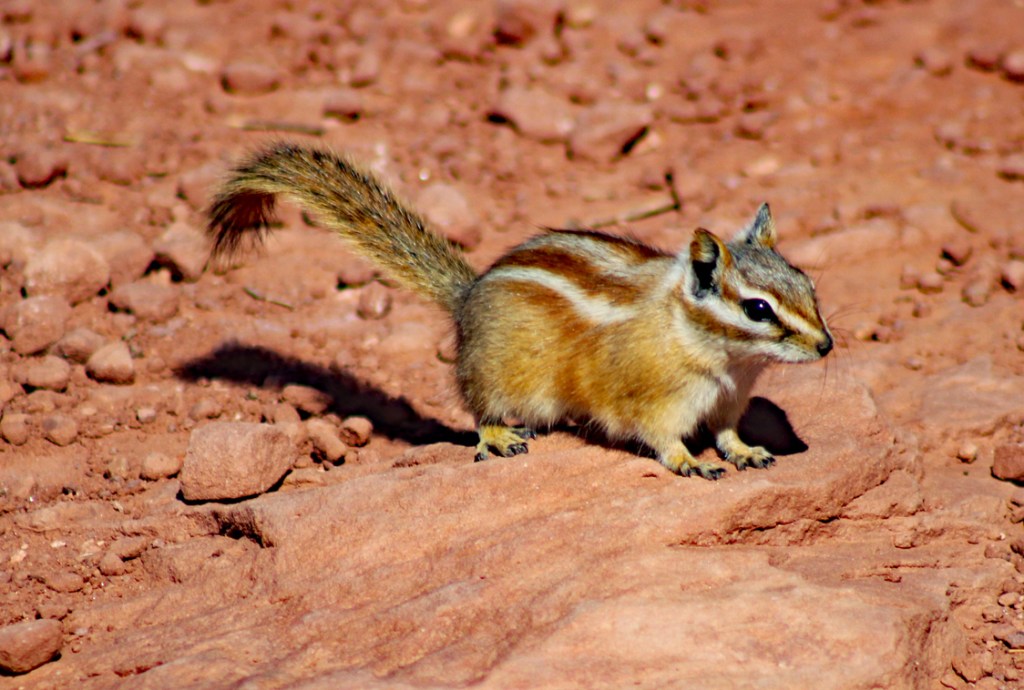
Carol inching out to a ledge at the Grand View Point in Canyonlands.This time both of us went out on the ledge with a photo taken by a fellow hikerFrom the end of Grand View PointA western chipmunkGarter snake along the ridge
Parking was stll a challenge today at Canyonlands, but again we were fortunate to find a space at every trailhead and overlook. We talked with some people who told us they were unable to get into Arches today because of overcrowding.
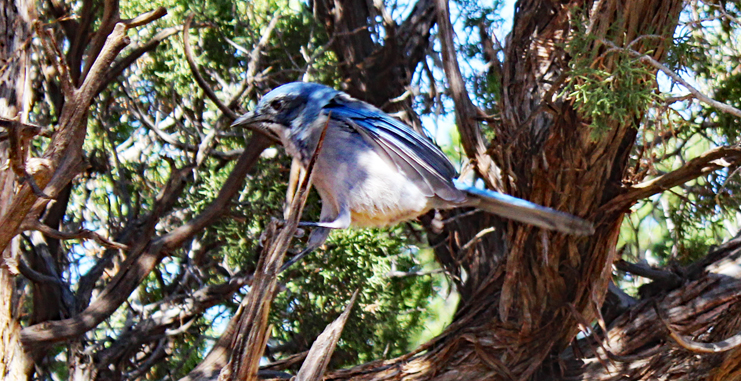
A scrub jay
We finished the day at the Dead Horse Point State Park, so named because the point used to be used as a corral for wild mustangs roaming the mesa. Cowboys herded up the mustangs and drove them to the point. When they chose the horses they wanted, they left the others corraled on the waterless point where they died, 2,000 feet above the Colorado River.
Dead Horse Point
Much of the day was hazy from smoke drifting from the Sequoia National Park in California.
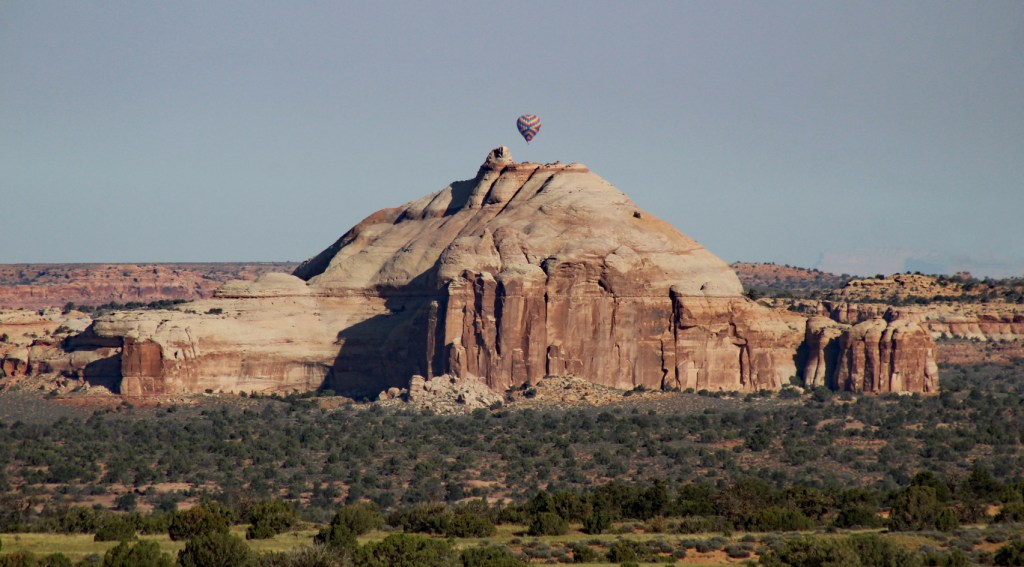
When we first entered Canyonlands, we spotted this hot-air balloon drifting across the mesa.
Some other images of today’s explorations:
One more day in and around Moab — still making last-minute plans.
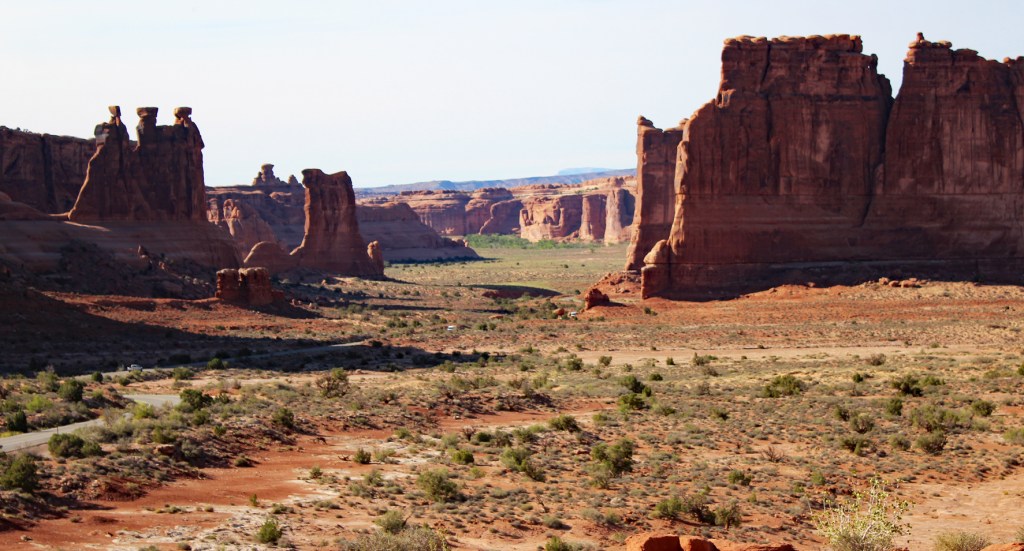
There’s not a whole lot to say about today except that Arches National Park is truly amazing from its trademark arches, towering spires, deep canyons multi-colored landscapes and one winding road that takes you close to all that’s good.
The day started with watching the sunrise and the moon set from our campground outside Moab.
We drove into Arches just before 9, but the traffic was already backed up at the gates. Once we got through we followed the advice of Judith and Steve Hill and drove directly to the far end of the park while most other cars and RVs pulled into overlooks and side roads along the way. But when we arrived at Devils Garden, every parking space was filled and we considered leaving the park and heading to Canyonlands and then coming back to Arches tomorrow, at least an hour earlier. But just as we pulled around the loop near the main trailhead, a car pulled out and we pulled in.
Parking at Devils Garden
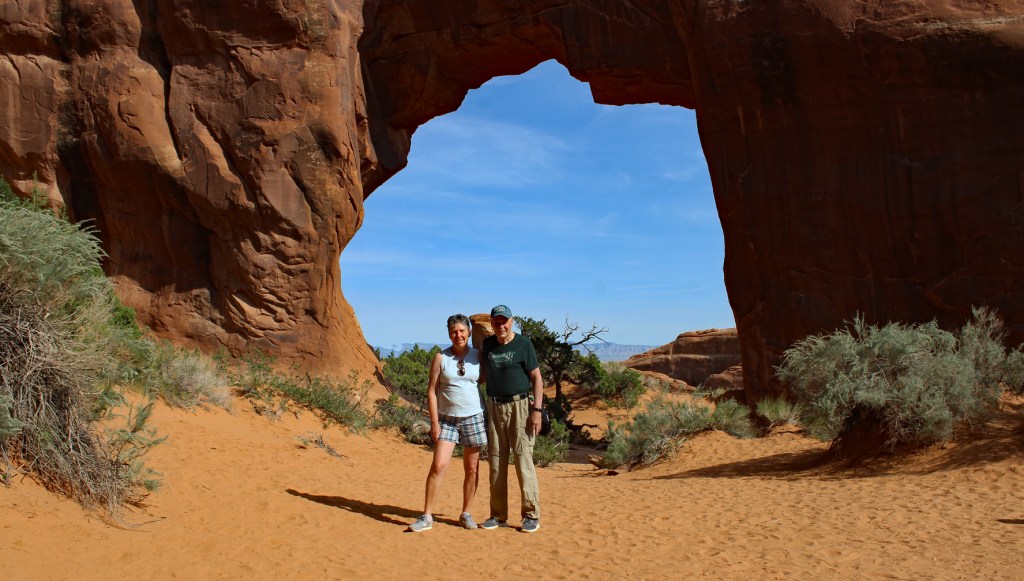
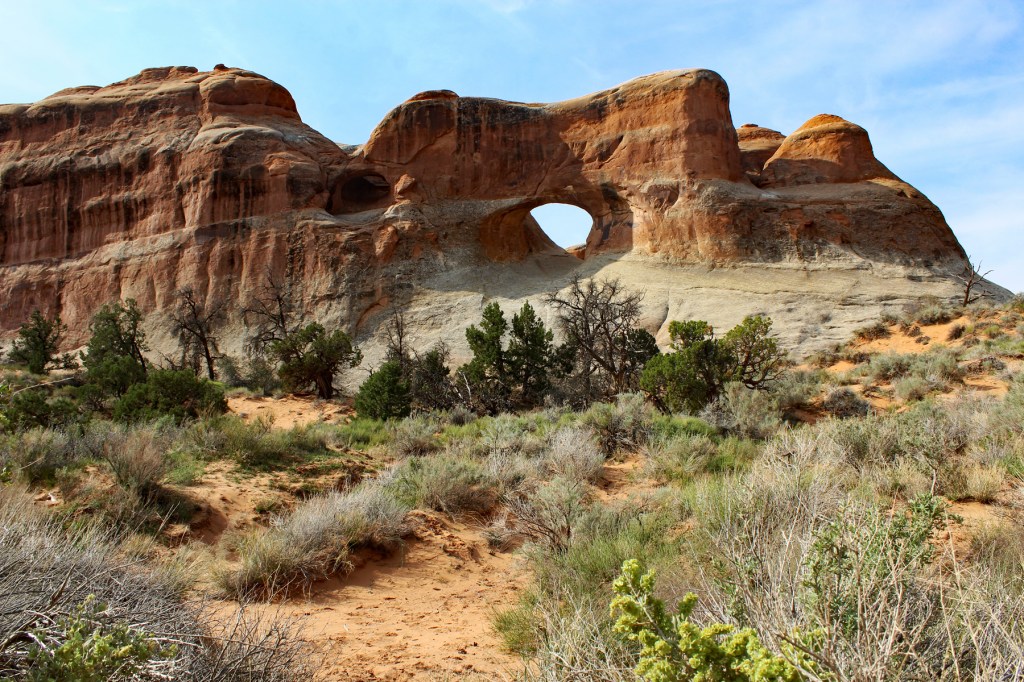
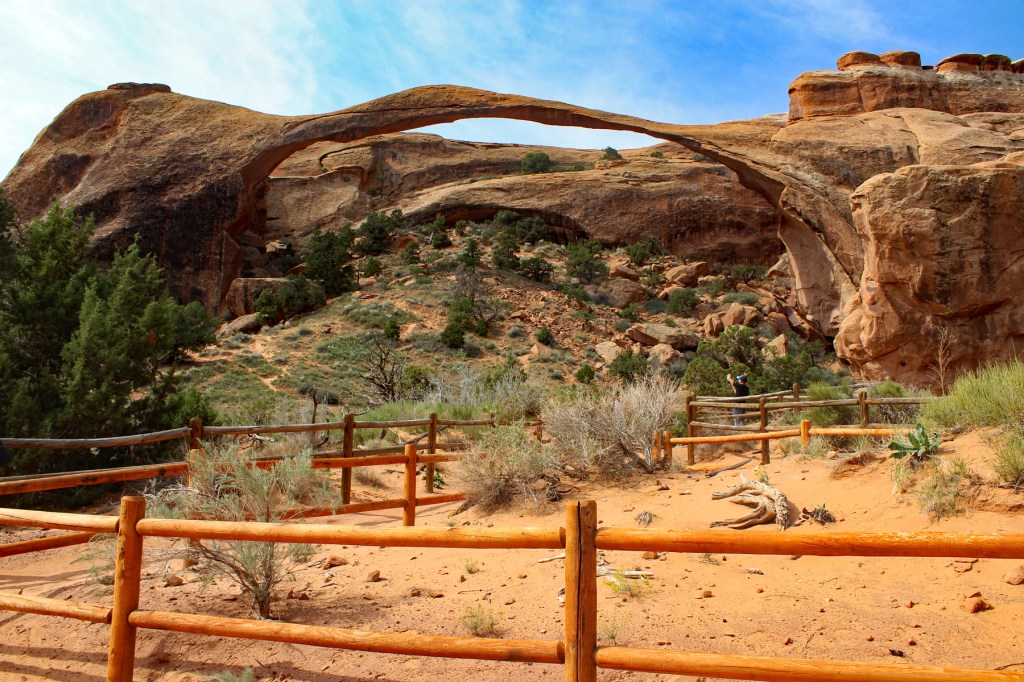
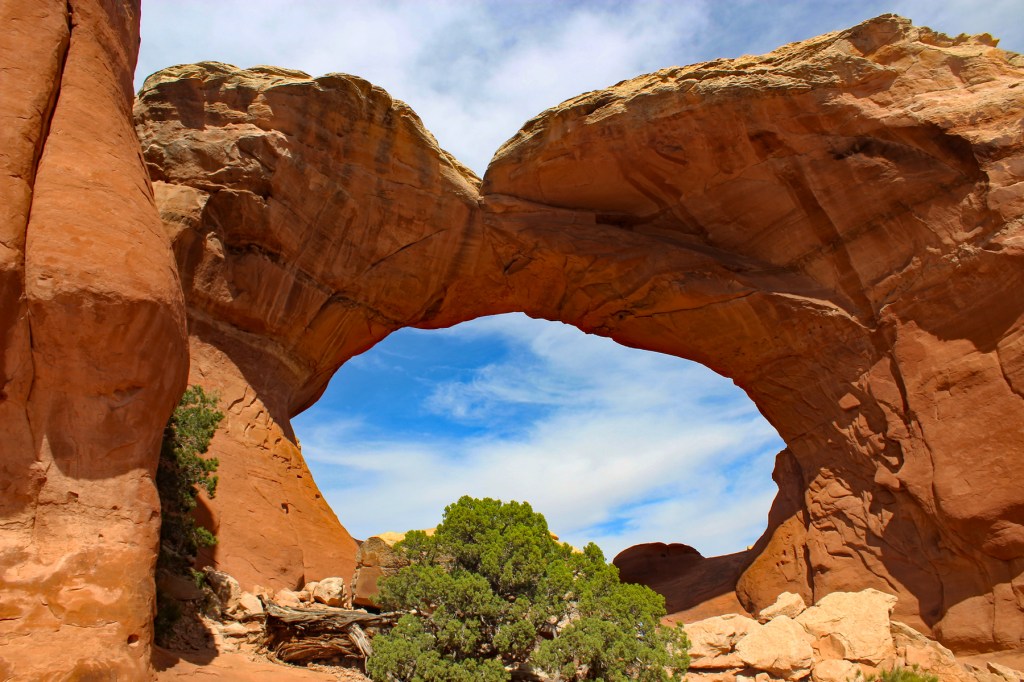
We hiked back the trail to the Pine Tree Arch, took a second trail to Tunnel Arch and a third to Landscape Arch.
Here we are at the Pine Tree Arch.Tunnel ArchLandscape Arch
By the end of the day, we took 11 different trails to a variety of arches and trademark sites totaling 9.5 miles (first time my fitbit went over 20,000 in one day). It was in the mid 80s with bright sun, but no humidity and a gentle breeze. When we got back down to Moab, it was in the mid-90s.
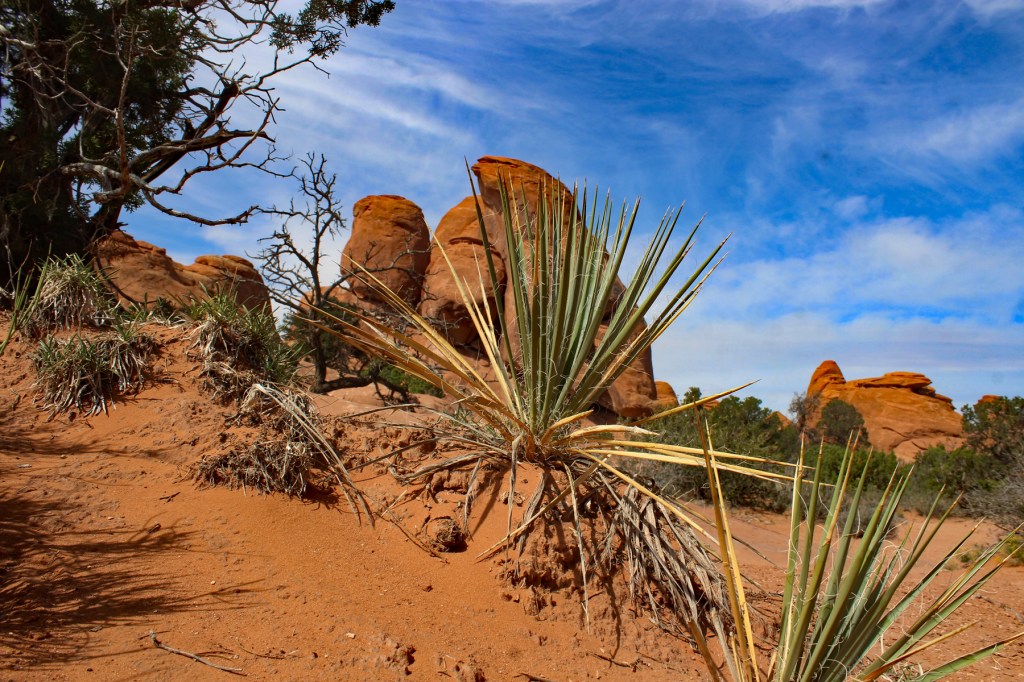
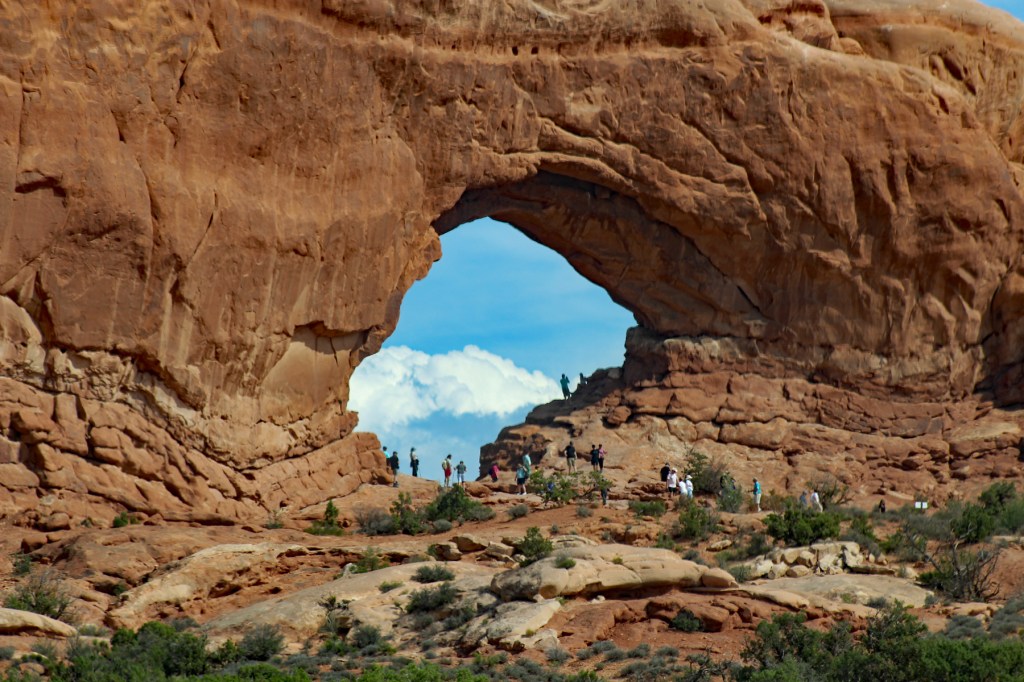
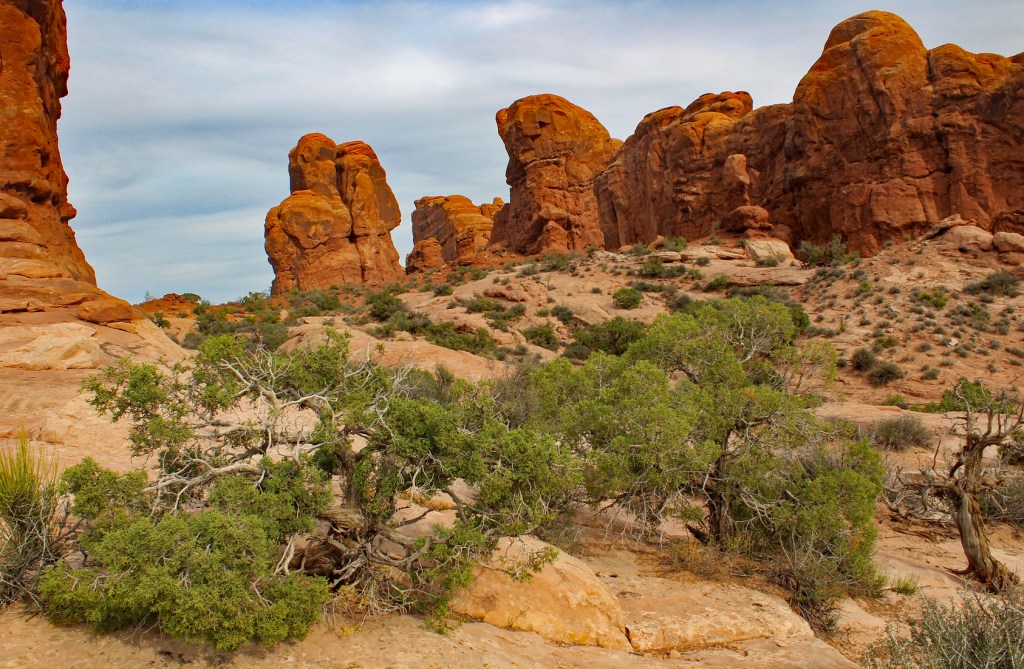
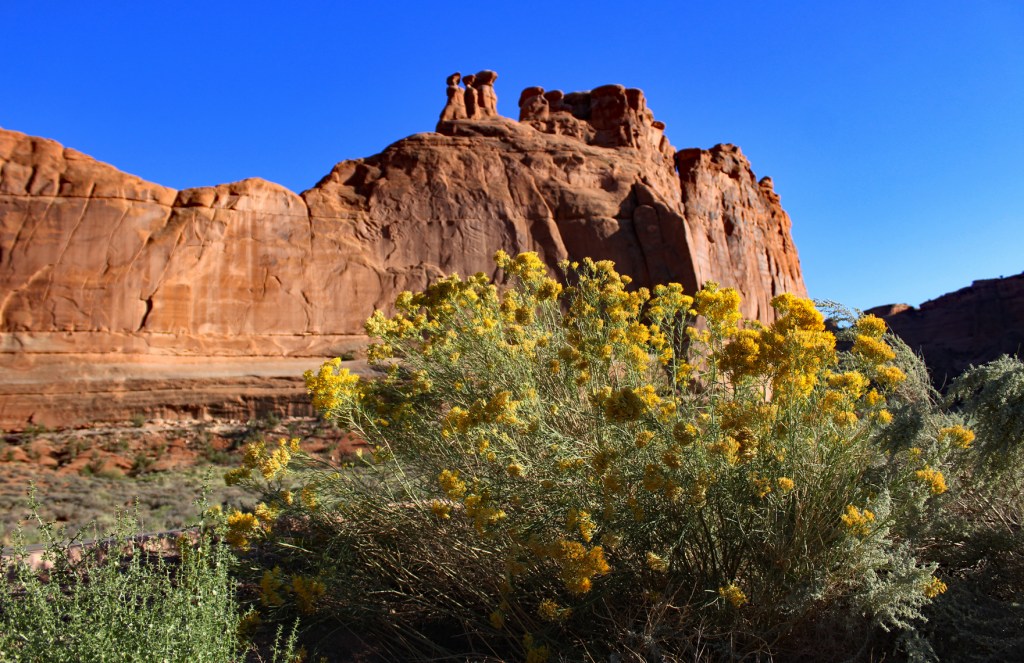
Here’s a selection of photos from what was a very rewarding day:
Here we are at the North Windows Arch
Tomorrow it’s on to the Canyonlands National Park and the Dead Horse Point State Park.
It was mostly a day of travel across southwest Colorado, up and over 10,000-foot passes with sweeping curves and hairpin turns and then northwest into Utah to Moab. We did’t arrive until almost 4 p.m., but still traveled into Arches National Park just as the sun was casting long shadows across the mountains, spires, and arches.
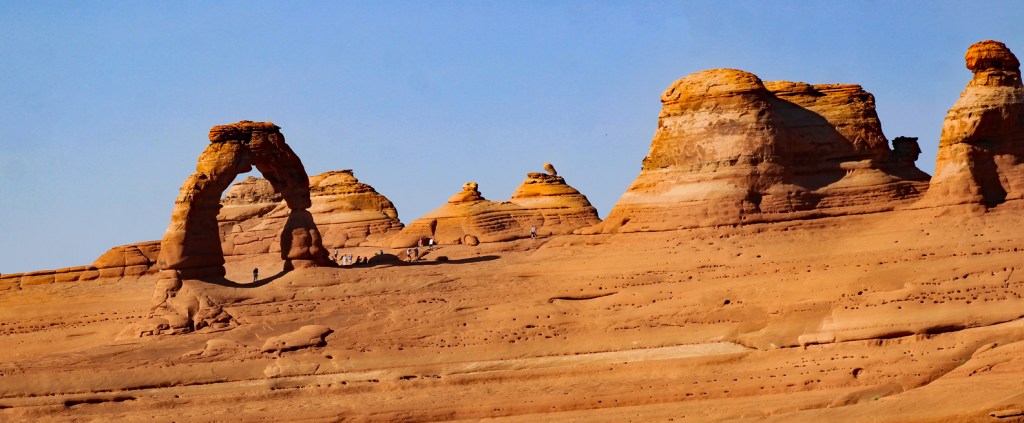
We mainly wanted to do some quick exploring before sunset, but did take time to take a short hike up to an overlook to the Delicate Arch.
Tomorrow we plan to spend all day in Arches with a few hikes, but nothing too long — it’s forecast to be in the upper 80s. Only a day ago we left Estes Park when it was 29 degrees.
Here are a few more images from our quick exploration of Arches:
Today we left Rocky Mountain National Park and traveled south and west through Boulder, Denver, Colorado Springs (we saw the Air Force Academy, Kathleen), and Pueblo. Our final destination was the Great Sand Dunes National Park, the largest sand dunes in North America. It was 29 degrees when we left RMNP, but in the mid-60s at the Dunes.
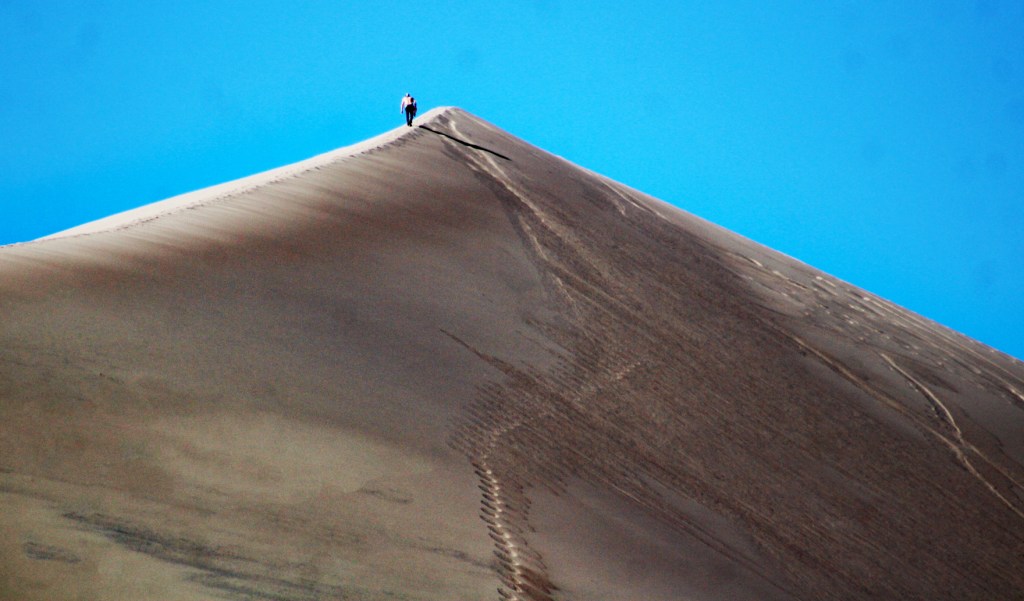
We walked through the soft sand to the first tall ridge, but didn’t proceed to the higher elevations. It’s still a challenge for us to hike too far and up in these higher altitudes (I think we’re getting older, too). The Dunes are 7,800 feet above sea level.
Our campground is in the middle of a prairie below the Sangre de Cristo mountains and directly across from the Sand Dunes. Wifi is somewhat limited and I’m having trouble uploading more than a few photos. Hopefully you’ll at least be able to see what I send.
Some of the more adventuresome hikers here carry in sleds and sandboards to slide down the steepest slopes. We were thinking about renting a sled, but as I’ve already mentioned, just hiking up the dunes was about all we could handle. Below is one of the sandboarders.
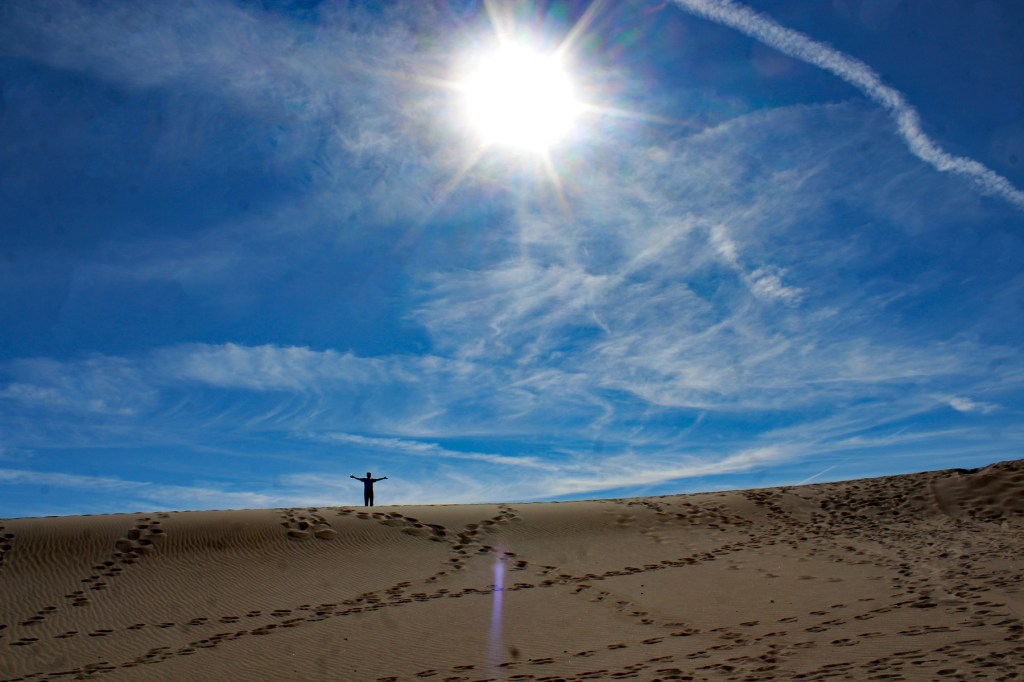
Here is Carol celebrating reaching the top of one of the ridges.
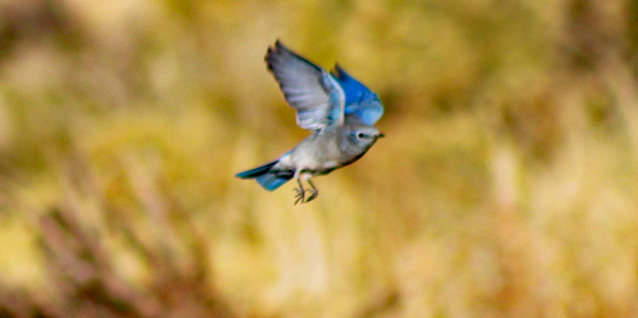
Back at the campground, this bird, I believe was a swallow, kept flying past our site. I need Grace for a better identification.
What would Colorado be without a cowboy enjoying the sunset.
And after the sunset, we enjoyed the arrival of stars, before the moon rise.
Finally, here’s a photo of the sunset on our final night in Estes Park. I took it after I sent the blog.
Tomorrow it’s on to Utah and Moab. Hopefully we’ll get there early enough to do some exploring in the Arches National Park.
We had some steady rain overnight at the campground in Estes Park, but much to our surprise and joy, it snowed in the high peaks, the first snow of the season.
We spent the morning shopping in Estes Park before heading back into the mountains after lunch.
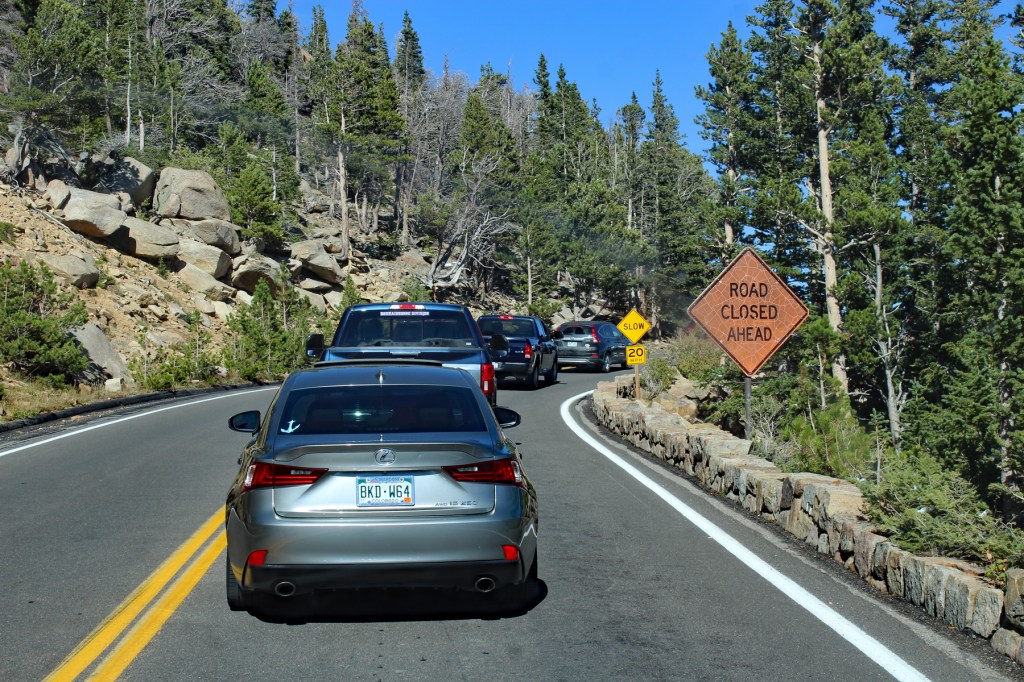
During our first two days here, we drove up and over the highest points on the road, 12,183 feet, which I’m glad we were able to do. Today the road was closed at the higher elevations. We drove up as far as we could before rangers turned everyone around.
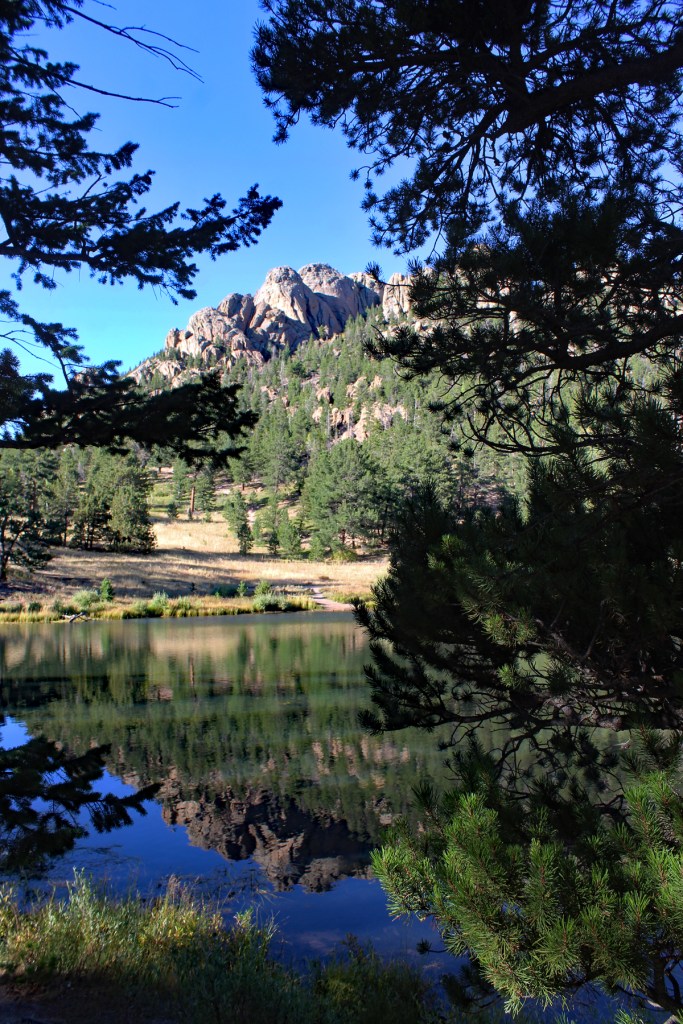
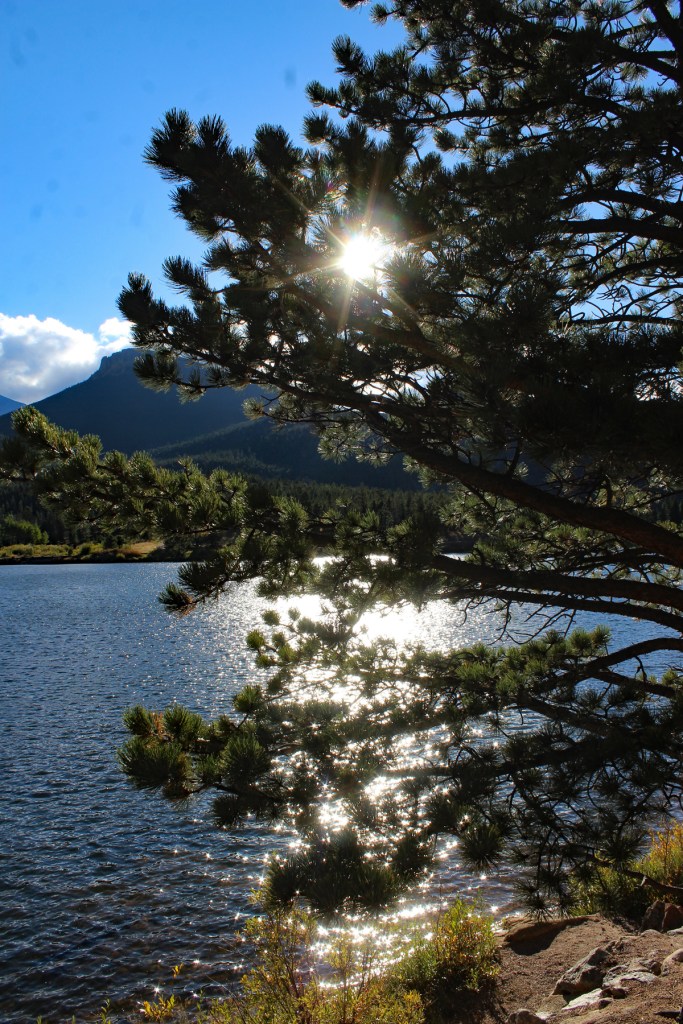
We drove back down and spent the rest of the afternoon on the other side of the park at Lily Lake. We took a leisurely walk around the lake with good views of Lily Mountain and some other peaks. It was a good way to end our time in the RMNP.
On the way back to the campground we saw a magpie.
Tomorrow it’s on to the Great Sand Dunes National Park, about 300 miles away.
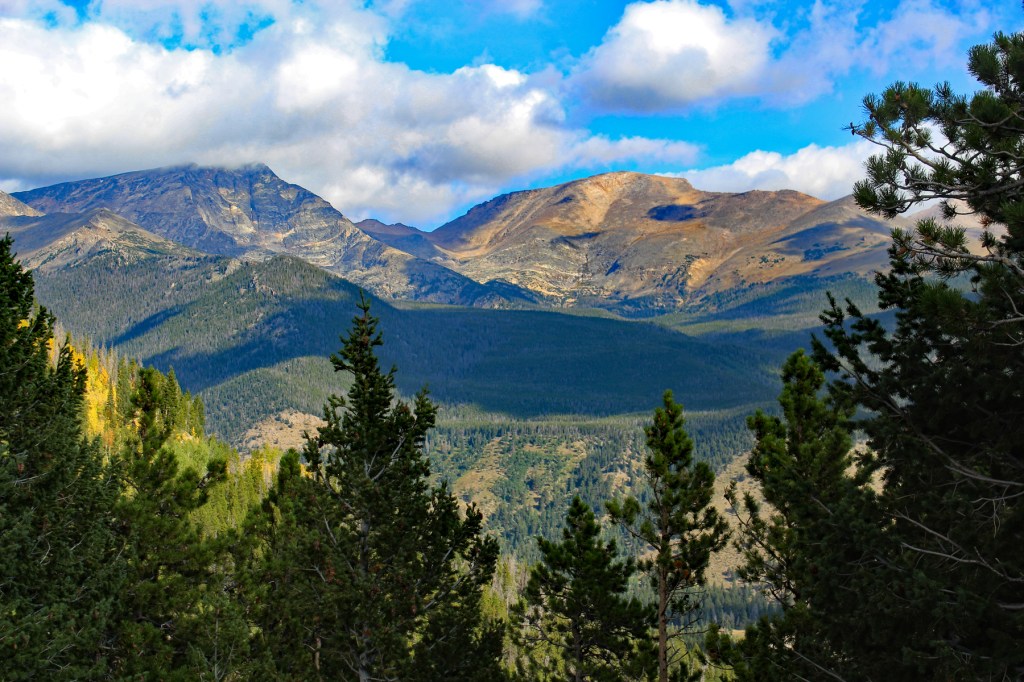
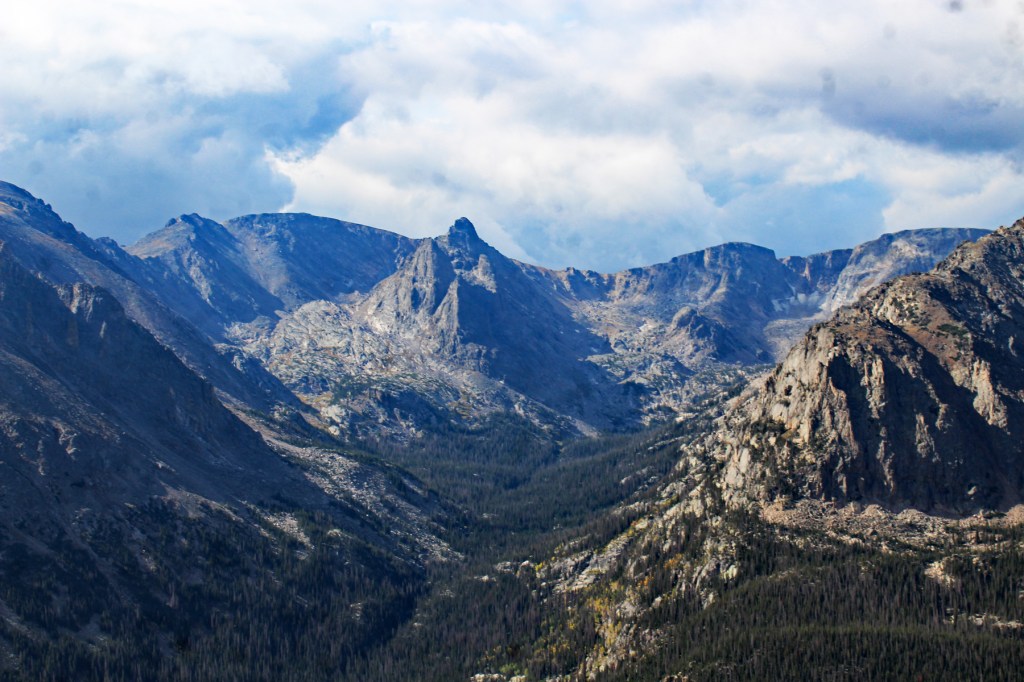
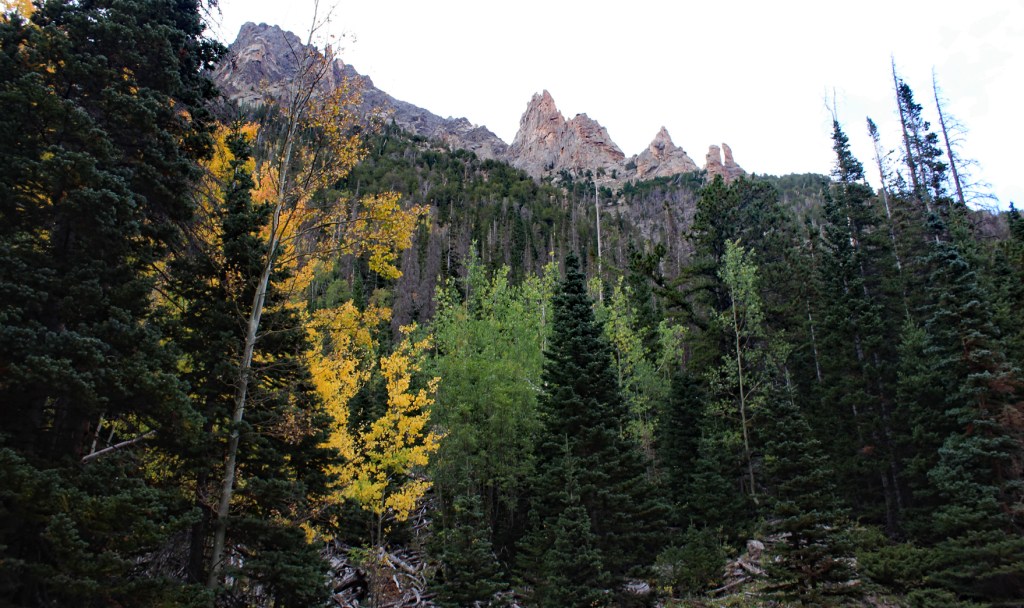
It was a full day of exploring both the east and west sides of the Rocky Mountain National Park. Clouds blew in, but then blew out again and for the most part, it was a picture-perfect day to marvel at the peaks, valleys, lakes, and everything in between of the Rockies and the Continental Divide.
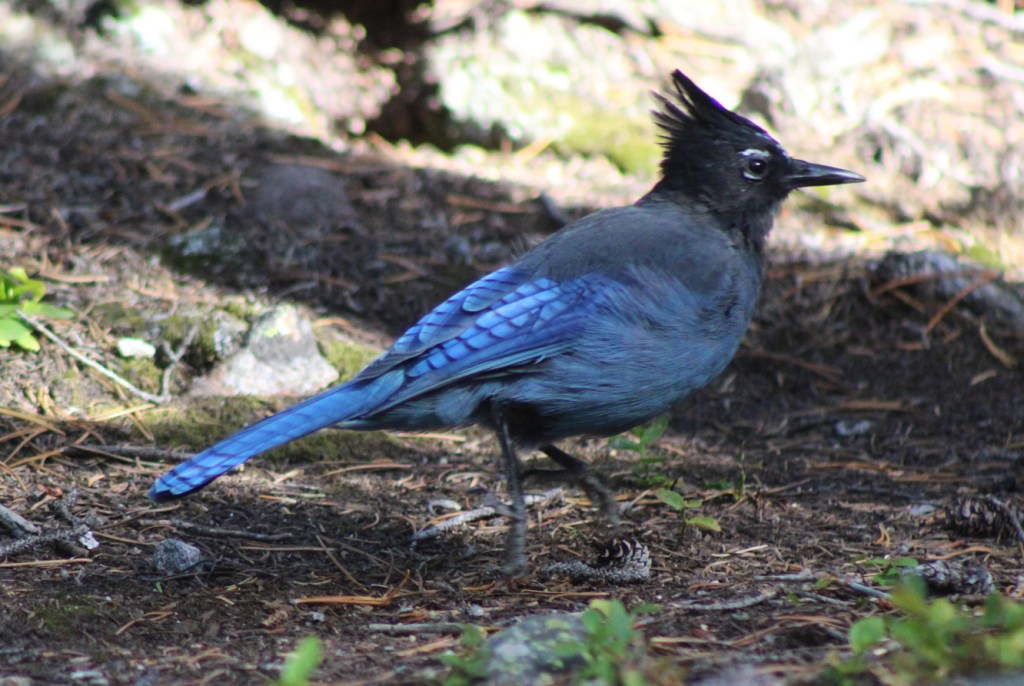
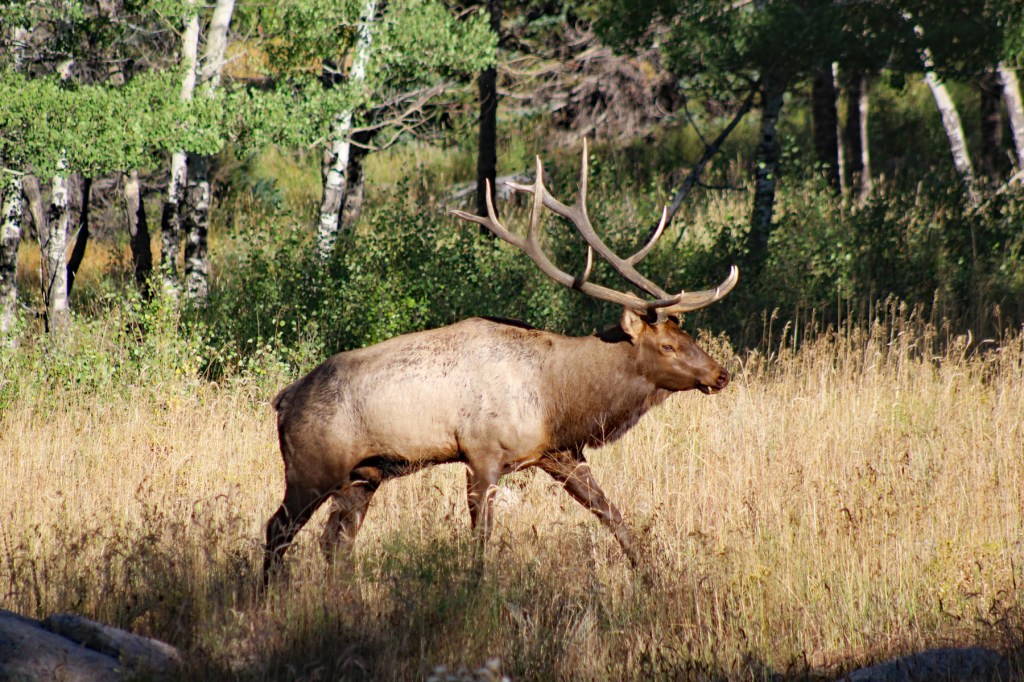
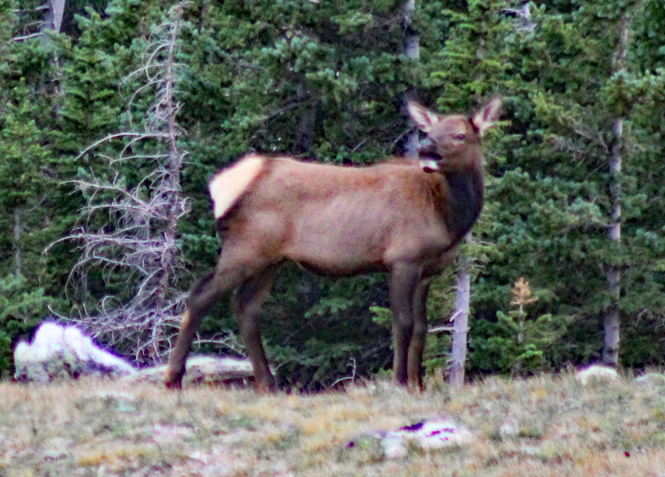
We saw elk on four parts of our drives, a few mule deer, a coyote (moving too fast across the road for a picture), a raven, and a magnificient stellar jay. We almost had a collision with three of the mule deer — we were just braking and turning into a pull-off when three darted out of the hills in front of us. More on our elk encounter later.
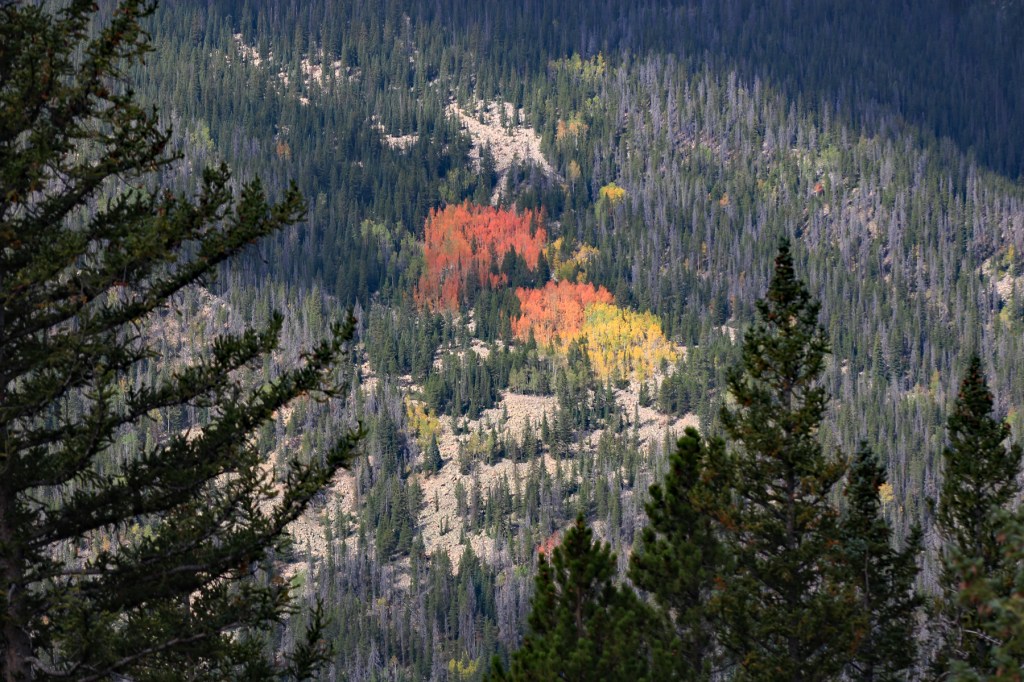
Enough writing, here are some of our favorite images:
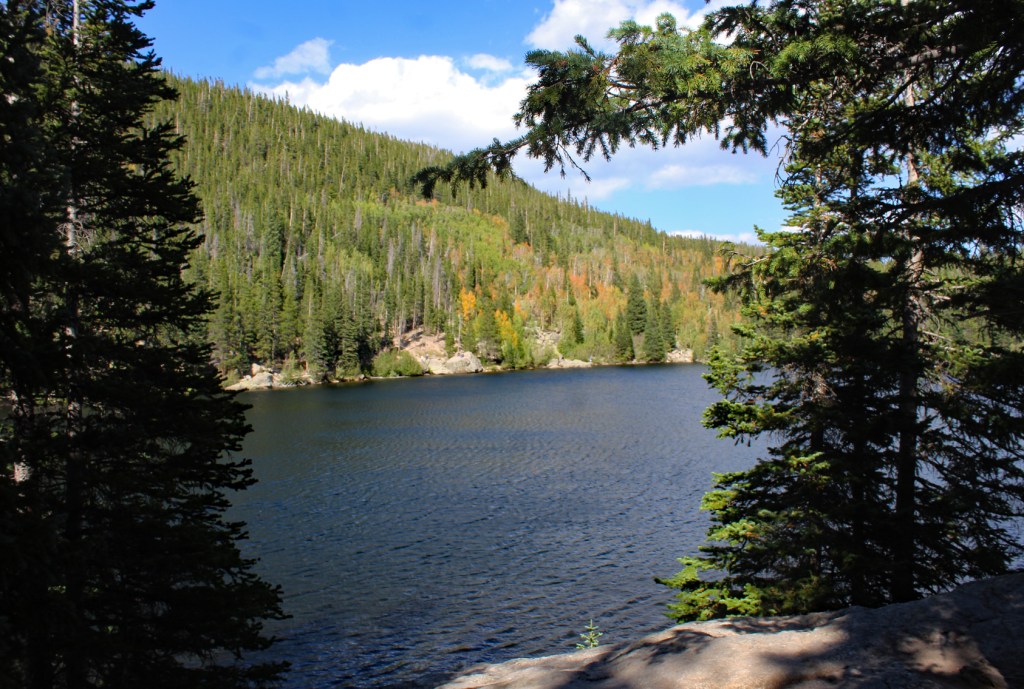
Aspens are turningSurprisingly, this is the Colorado RiverMule deerStellar jayBear LakeHere we are, sitting by Bear Lake and some of the high peaks behind us.We saw this bull elk twice during the afternoon, both times bugling around a herd of more than a half dozen cows.He was always in pursuit, but none of the females seemed very interested or impressed.
One more day in the RMNP and then south to the Great Sand Dune National Park.
We drove 357 miles today across western Kansas (all prairie) and into Colorado, turning north to Estes Park, just outside the entrance to the Rocky Mountain National Park. After checking into the KOA Campground, we drove into the park at 4 p.m. (Mountain Time). The National Park has a system of limited entries this year and we had applied for and received a permit for 4 p.m. more than a month ago.
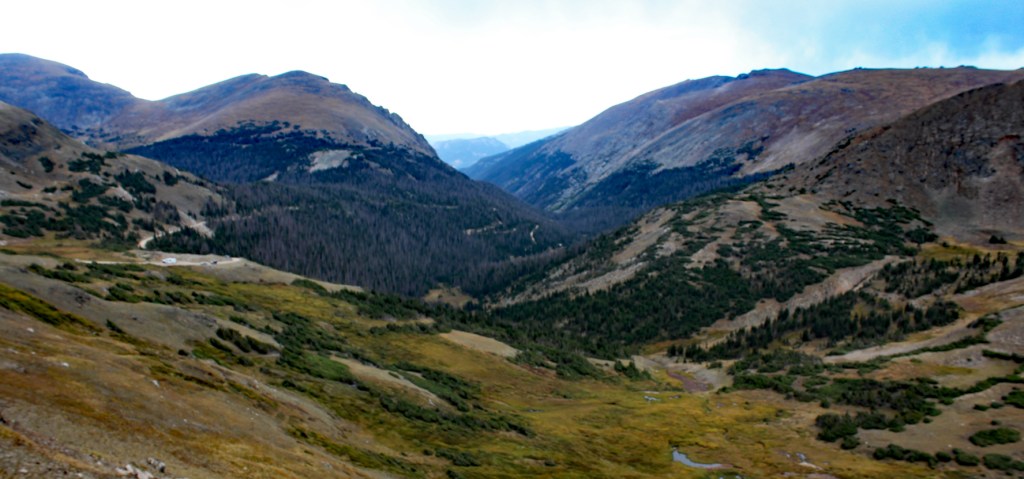
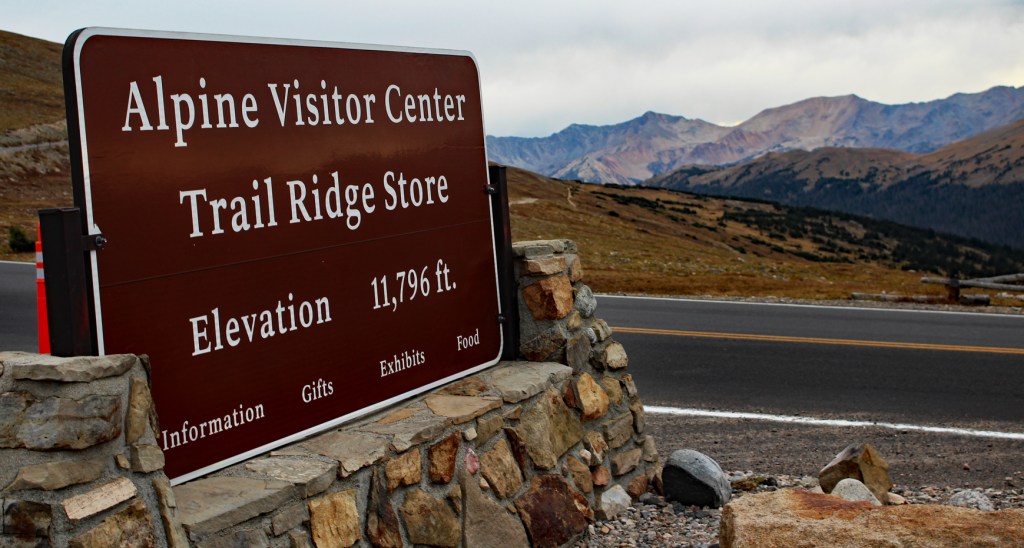
When we checked into the KOA, they suggested a good first day drive would be to go into the Fall River entrance and take an eight-mile dirt and gravel, single-lane road up to the Alpine Visitor’s Center at 11,796 feet. The maximum speed on the road was 15 mph and it had many hair-pin turns with jagged rock walls on one side and a deep drop-offs on the other. The road also had deep ruts and the Roadtrek was almost bottoming out on a few of the hairpins, including some on which we had to go part way around the turn and then back up before we could safely move forward again to avoid hitting the rock walls. The Roadtrek is 20 feet long and nothing longer than 25 feet is allowed on the road. Fortunately there were many pull-offs to allow other cars and trucks to pass. It was 84 degrees when we started up the road and 52 when we got to the top.
One of the pull-offs at we let the Roadtrek (and us) to catch our breath.
At one of the pull-offs, we saw our first elk, a cluster of males and females. It’s rut season and the bulls bugaling echoed throughout the valley.
When we reached the Visitor’s Center (closed for the season) we drove on a short distance farther to the highest point on the road, 12,183 feet, and got out to climb up a small outcropping on the rocks. We immediately returned to the Roadtrek, feeling light-headed and dizzy from the altitude. Drinking a lot of water helped, but we opted to only drive for the rest of the day.
Here are some more images from the drive:
After I posted yesterday’s blog in Kansas, we drove out to Monument Rock, 50-foot high chalk spires in the middle of the prairie. They were amazing and they are the eroded remains from sedimentary deposits of the Western Interior Seaway that extended from the Gulf of Mexico to Canada, 80 million years ago. The small mud formations are nests for cliff swallows.











































 T&C Southwest Adventure 2021